Description
Compare any two exposure values, instantly.
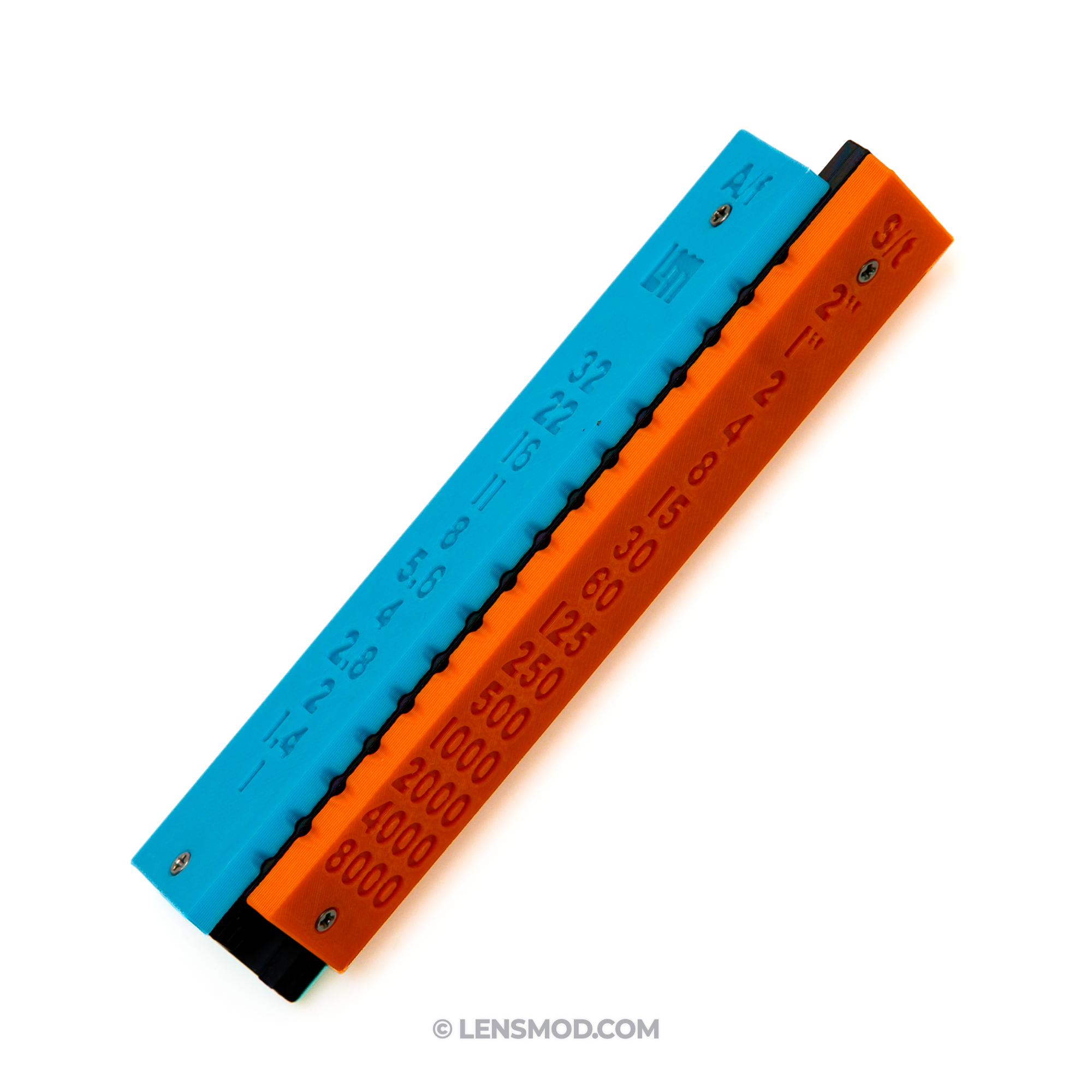
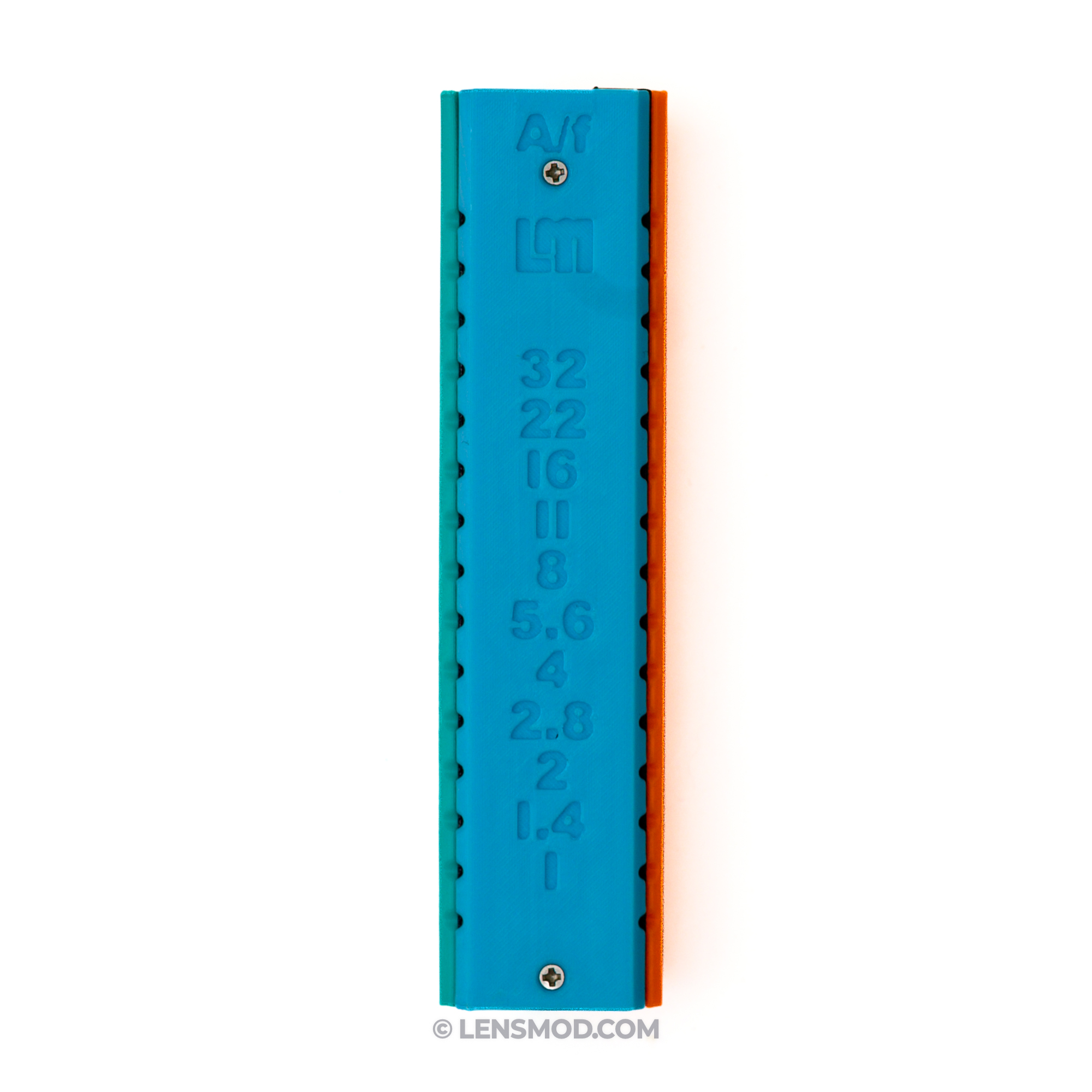
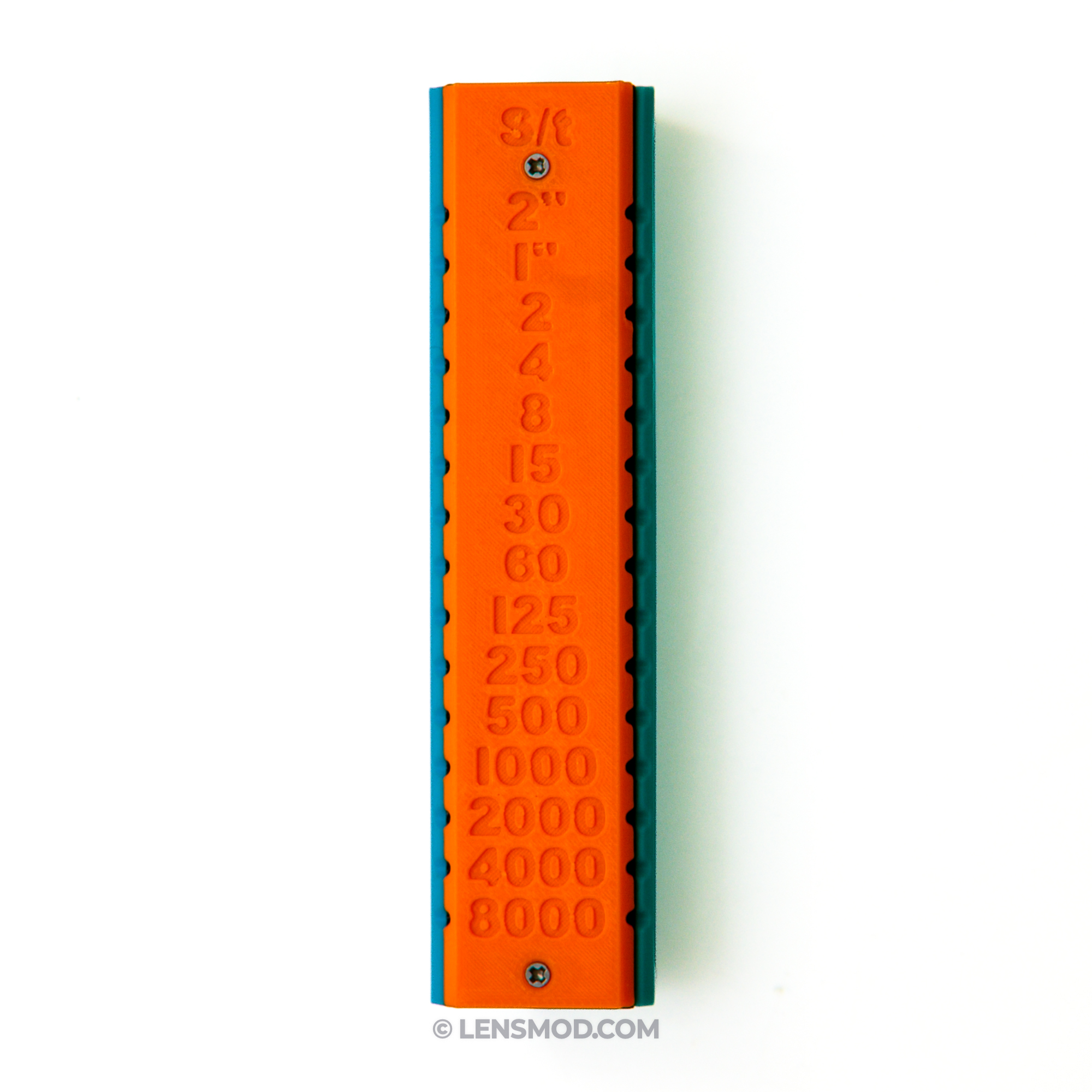
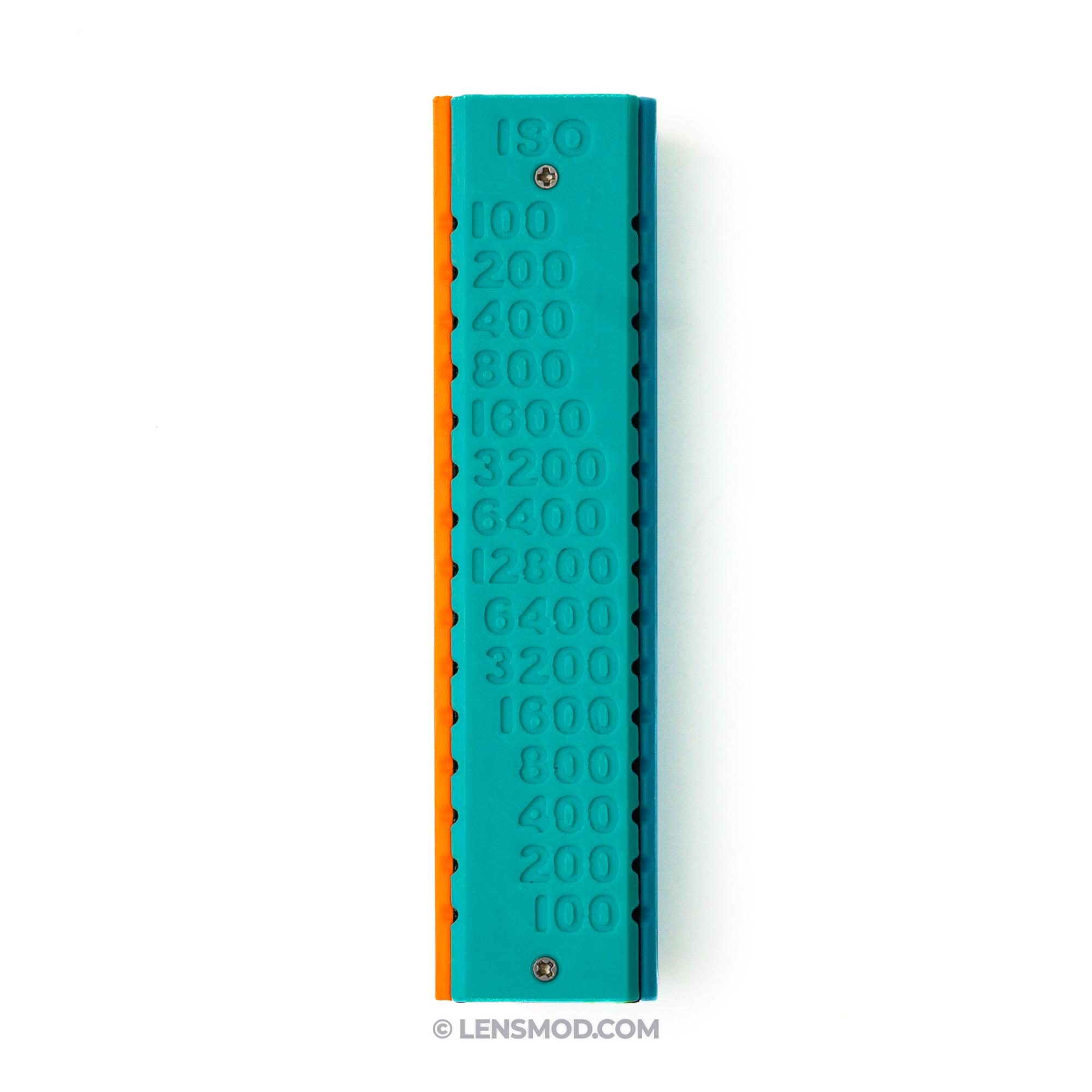
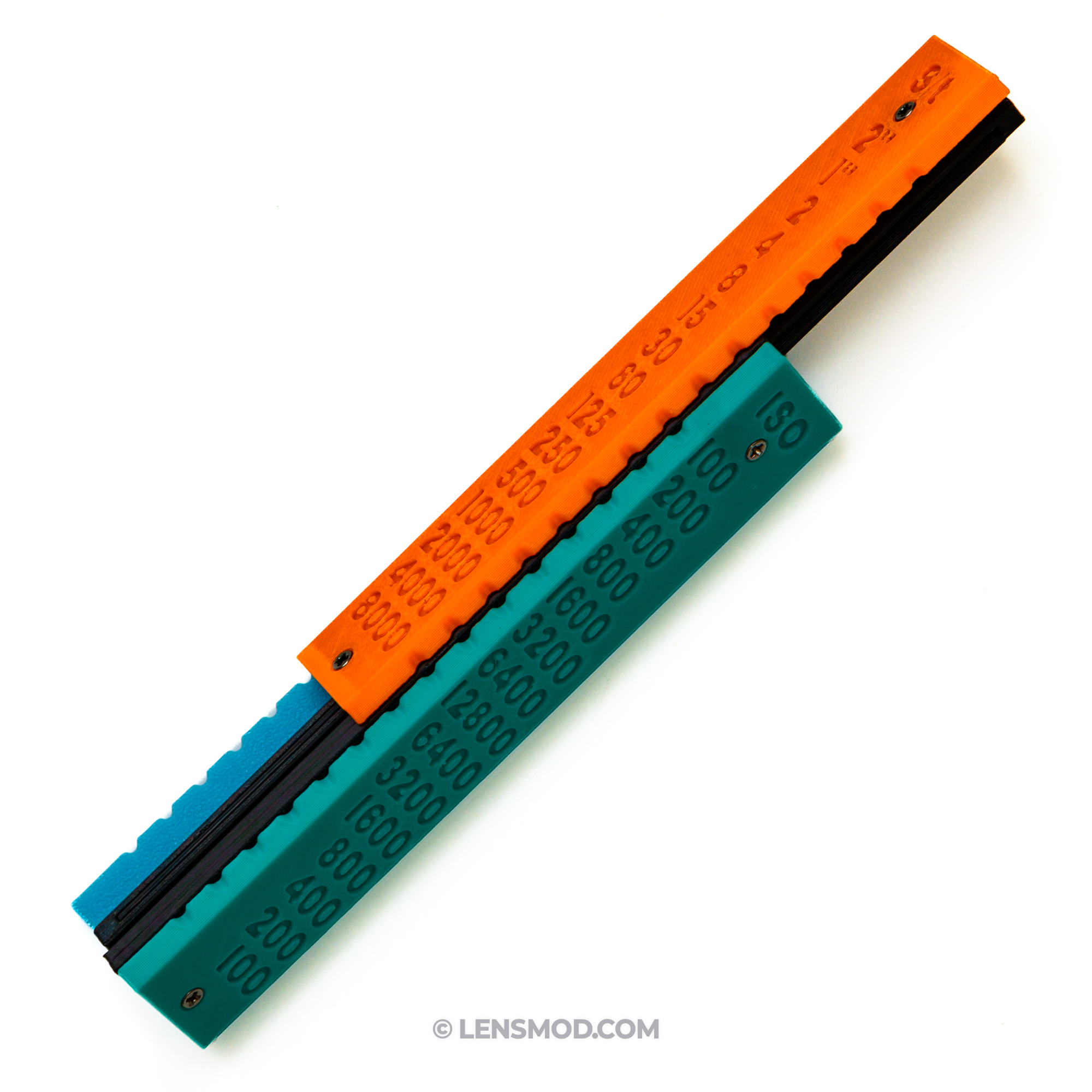
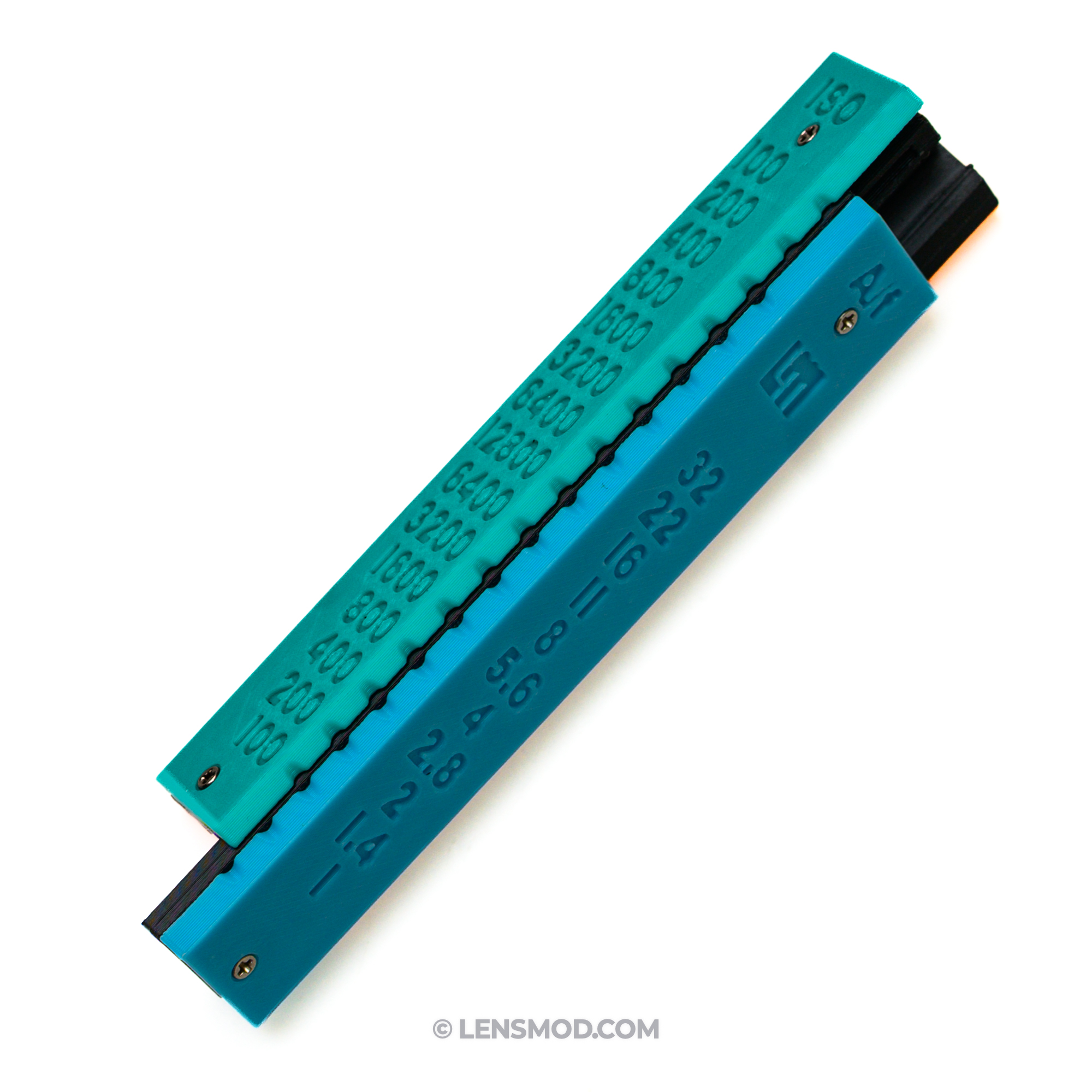
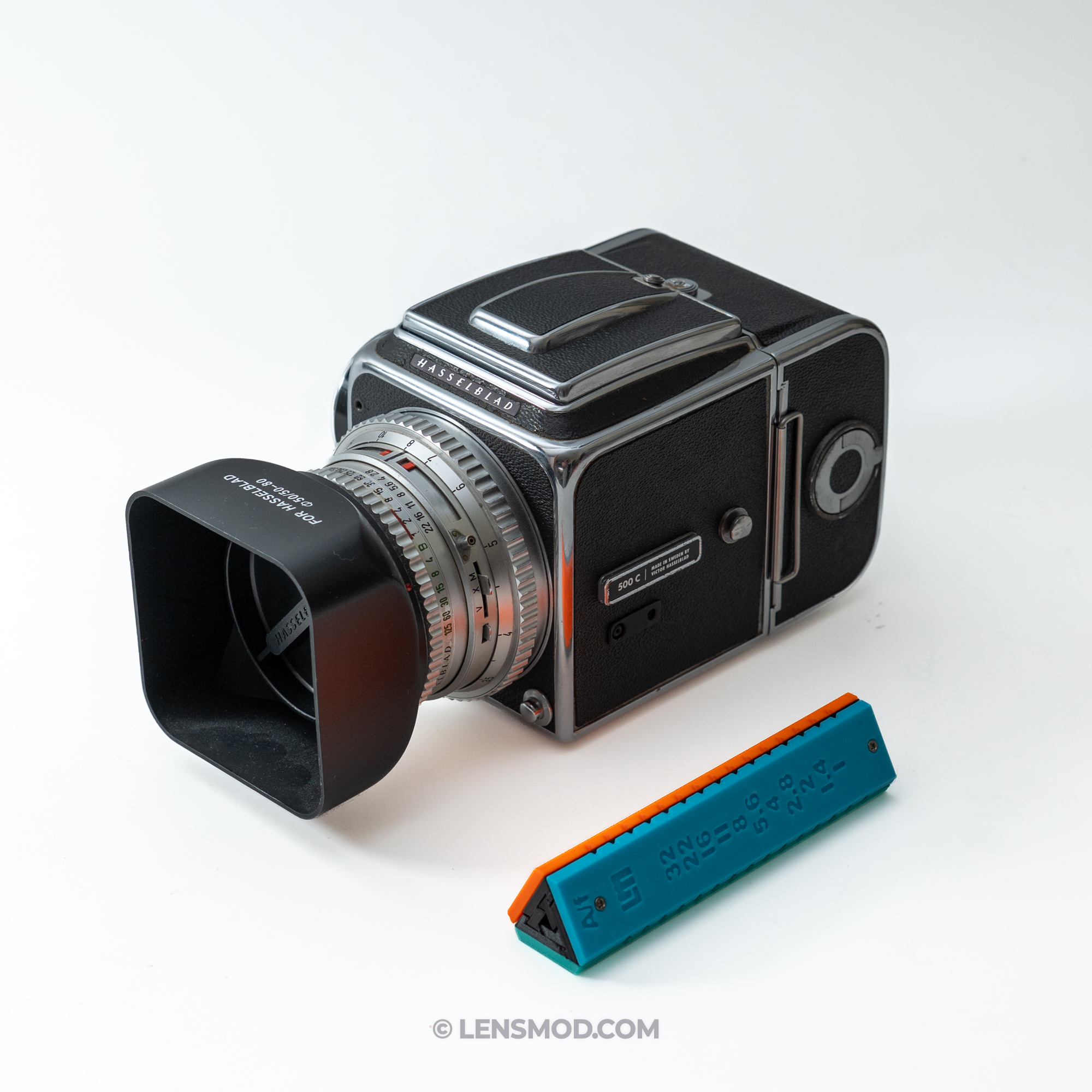
This compact, 3D-printed exposure calculator helps you understand how Aperture, ISO, and Shutter Speed relate to one another — two values at a time. Each of the three color-coded strips slides independently, so you can line up any pair — Aperture & ISO, ISO & Shutter Speed, or Aperture & Shutter Speed — and instantly see how they trade off against each other in the viewing window.
How it works:
Each strip represents one part of the exposure triangle:
- A/f — Aperture, from f/1 to f/32
- ISO — Sensitivity, from ISO 100 to ISO 12800
- S/t — Shutter Speed, from 4″ (4 seconds) to 1/8000s
Since all three strips move independently, you can compare any two at once:
- A/f ↔ ISO — see how much you’d need to raise or lower ISO for a given aperture change
- ISO ↔ S/t — see how sensitivity trades off against shutter speed
- A/f ↔ S/t — see how aperture and shutter speed trade off directly
This isn’t a full three-way automatic calculator — it’s a simple, tactile way to see and understand each pairwise exposure relationship, one comparison at a time, by sliding whichever two strips you want to compare.
Features:
- Fully mechanical — no batteries, no apps, works in any weather
- Smooth-sliding 3D-printed construction with a single-sided viewing window, positioned for comfortable, easy reading
- Color-coded strips for fast, intuitive reading
- Compact size — fits easily in a camera bag or jacket pocket
- Great for learning and visualizing exposure relationships, not just calculating one exposure
A great companion for:
Manual film cameras, view cameras, pinhole photography, and anyone who wants to build real intuition for how aperture, ISO, and shutter speed relate to each other.
Please note:
Strip colors are randomly assigned based on available filament at the time of printing and may differ from the photos shown. The layout and functionality remain exactly the same regardless of color.
International Shipping: International buyers are responsible for any customs duties, taxes or import fees charged by their country. These charges are not included in the item price or shipping cost.